Planting in spring

A year ago this week, we walked you through the process of planting out at Sim Place. This spring, Pine Island Cranberry is focused on the Rainbow bogs at Oswego that we started renovating early last year.
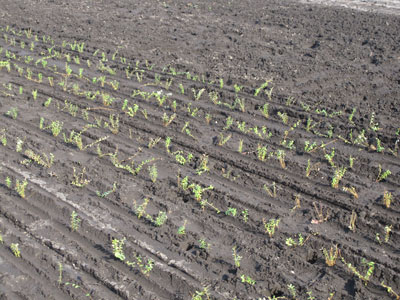
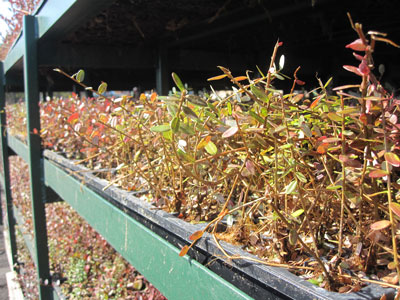
Much like with our fall planting on the High Bridge bog, the bogs at Rainbow (formerly planted with Early Blacks) will be planted with Crimson Queen, a variety chosen for higher yield potential. A major focus for Pine Island is increasing yield while lowering production costs, and renovation is a driving force behind our growth strategy: young bogs are redesigned for efficiency as well as yield.
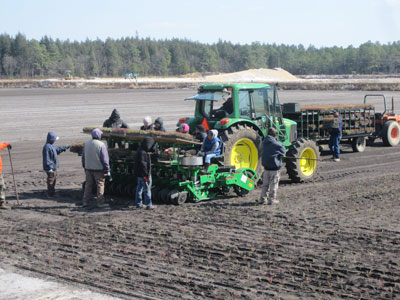
The process remains as it was for fall and last spring: the planter is loaded with the rooted cuttings, which drop onto a carousel. Other team members follow the planter to make sure the cuttings have been placed correctly.
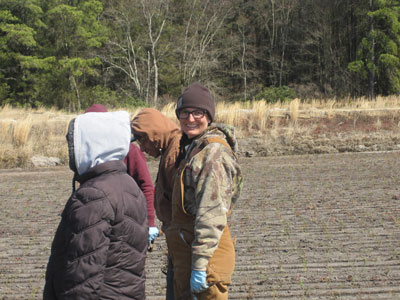
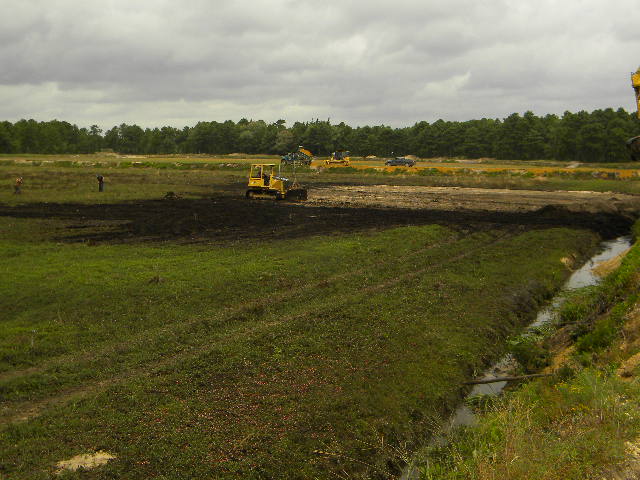
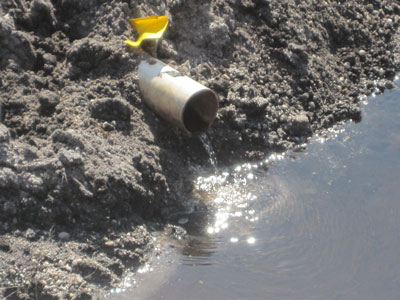
Bog Renovations manager Joe Colon thinks it’s looking great. “The conditions were bad for a while,” he says. “Every weekend we’d start getting ready, and then it would rain. Or snow. The soil would soak that right up. But this week has been a really good week. The underdrains are working really well. We disced the bog and now Ivan’s land-leveling to get Rainbow #1 ready to go after #2 is finished; by tomorrow it should be drained enough to make planting easier. These are nice bogs to work on; really good soil. But they were cranberry bogs in the first place; we’d already been taking good care of them!” He’s hoping to be finished this bog by the end of the week, if the weather cooperates; in total we’ll be planting about 25 acres. Weather is always a concern, as effective bed drainage is critical; the humid climate can provide a favorable environment for Phytophthora cinnamomi, a known cause of root rot.
As it was the first day, the teams were working out logistics. Both our four-seater and six-seater planters used in tandem can speed up the process considerably by starting at opposite ends of the new bed and meeting in the middle. Kelvin Colon, one of our foremen and a planting veteran, spent some time making sure everything was straightened out in order to do as little hand planting as possible.
Our planting crews have mastered the art of team work. It started a couple of weeks back, building the carts we use to haul the plants on the bog.
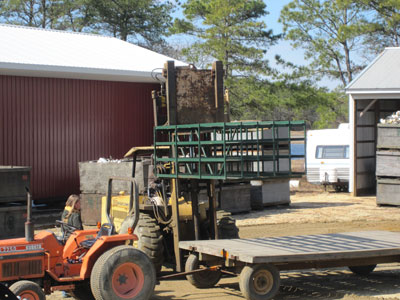
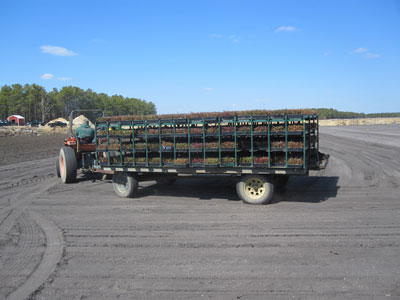
Planting supervisor Kylie Naylor has been hard at work since well before this week. Based on our fall average numbers, she set up a spreadsheet to calculate how many plants we would need over how many acres in order set targets for both number of trays per day and number of acres planted per day. But it’s not just about numbers, she says. “Communication is what’s really important. I have to keep in constant contact with Integrity Propagation so that they always know how many trays we need and when we’ll be picking them up. But it’s even more important to communicate with the team in the bog. A lot of the work is between Kelvin and me; we both have to know what’s going on with both planters. If one of us has to walk away, we both need to be aware of spacing and what everyone is doing on each crew while still keeping our targets in mind.”
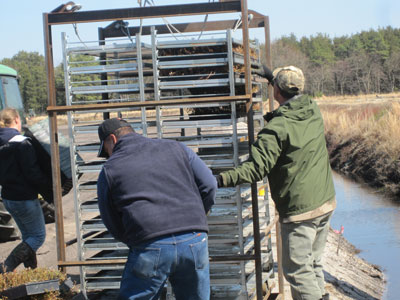
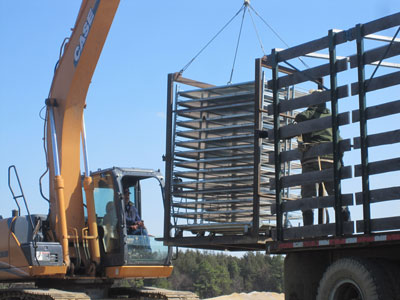
Kylie and Kelvin have done so well that the team has actually exceeded their target on both Wednesday and Thursday. It’s a great start for a great season!
Cultivating teamwork

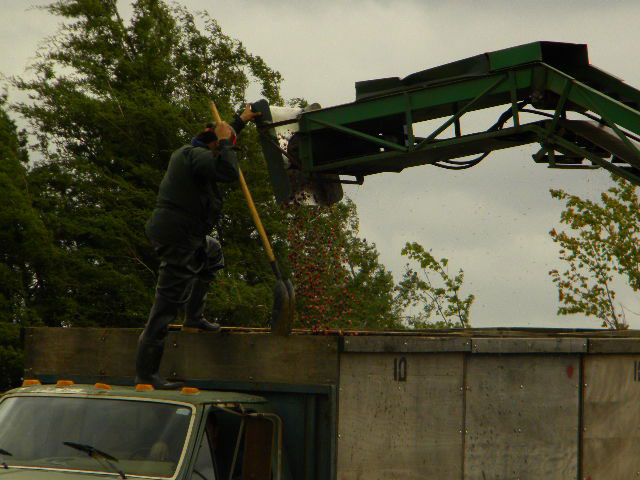
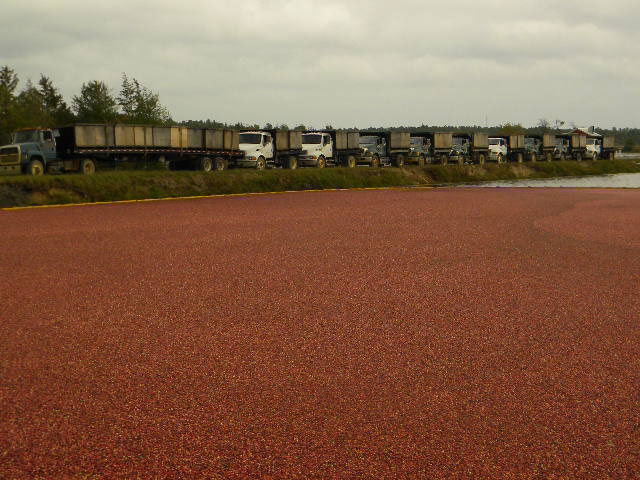
It’s the most exciting time of the year at Pine Island Cranberry: harvest has begun! Harvest time is when our core values, always a priority, acquire even greater urgency. Our Pine Island team becomes even more committed to doing whatever it takes to efficiently harvest our crop while maintaining our high quality standards. The results of harvest (minus uncontrollable weather events) are proof of the communication and teamwork among the PIICM program, our Equipment/Facilities program, and our continuing commitment to operational efficiency. Ultimately, we are growers, and it informs everything we do.

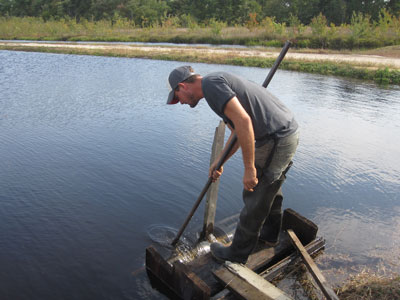
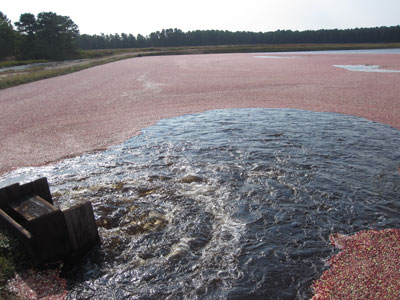
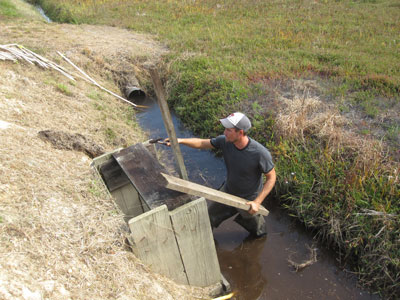
It all starts, as we have said before, with the water. Water is essential for cranberry production all year round, but during harvest good water management is paramount. At Pine Island, managing the water for their crews is the central task for our three harvest teams, led by Jeremy Fenstermaker, Gerardo Ortiz, and Tug Haines. Jeremy, our Green Team leader, who has been running a harvest crew for several years, says, “You always have to stay a little ahead of the flooding. We’ll be moving down to a new bog system Friday but I have to have the water started well before that.” While he has actively studied the methods, he’s also picked up a lot of knowledge along the way: “You eventually develop an instinct for water levels and how to raise and drop the levels in a bog in order to maximize efficiency for the crews.” He’s always thinking of ways to make things better, how to move water faster. Part of his job is simply making daily observations and taking note of things that could continually be improved. He says, “Sometimes you find a place that would be better to put a gate, or you find a way to move water through a canal rather than a reservoir.” In order to conserve water, Pine Island manages harvest so that we reuse as much water as possible to harvest as many bogs as possible. It’s arranged in a very specific pattern to work with gravity and conserve energy.

While it is the overriding concern, water management is not a team leaders’s only concern. Jeremy also has to coordinate with his crew leaders, Rick Zapata and Jorge Morales. When Rick and his picking crew are done, they move ahead to the next bog while Jorge and the gathering crew begin to corral the berries and send them over to the packing house. The team leader’s job is to make sure that the timing of each crew complements the other.

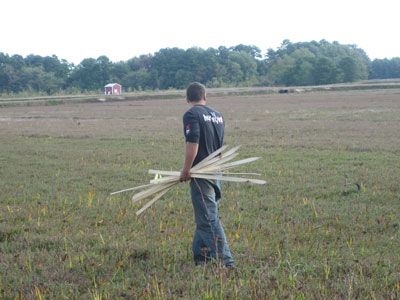
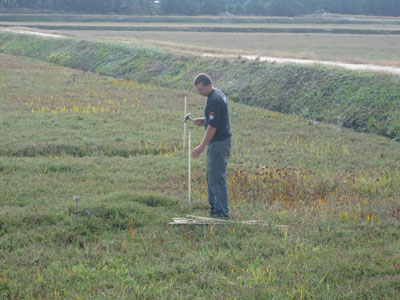
Even before the bog is flooded, the team leaders have a lot to do. They need to pull sprinklers, stake bogs so the picking crew leader knows which direction to pick, place boards in flood gates, flood to picking level, pick, flood some more in order to tighten the boom around the berries and bring them to the elevator without having to pull through high grass or weeds, and then gather. “And it’s not as easy as it looks,” Jeremy says wryly.

In addition to maintaining the careful choreography of a typical daily harvest, the team leaders must have a back-up plan for when something goes wrong. . .and something will always go wrong! A flood gate will get clogged, a harvester will break down, a truck won’t start. . . a team leader needs to prepare for all those things and either know what he has to do to fix them himself or how to delegate. Jeremy, Gerardo and Tug make sure that whatever needs to get done gets done: they’ll do whatever it takes and keep making it better. “Knowledge comes with experience,” Jeremy says. “If you do it long enough, you get a feel for what needs to happen.”

The start of harvest

Our team is still working hard on the post storm cleanup, and two of the bogs that were hardest hit (Otter and Fishhead) are back on track: the debris has been removed, the holes have been filled in, and the dams have been repaired. Also, the damage to the vines may not be as terminal as we feared. Next growing season will be a true test of their resiliency.

While harvest will not officially begin until Monday, the Pine Island team picked our first bog of the season on Tuesday. Ocean Spray’s Chatsworth Receiving Station wanted to test their new equipment, so we were able to help them and at the same time give ourselves an idea of how the flooding affected our crop. It worked out well for everyone.

Ocean Spray is placing particular emphasis on TAcy this year (as mentioned in our entry on varieties, TAcy is an acronym for “total anthocyanin concentration” and is a unit of color measurement used in a cranberry), so we chose Savannah #4, a bog planted with the Demoranville variety, which is specifically grown for early fruit color development and high TAcy in addition to size, quality, and vigor. This makes it a perfect control bog for all of the various extenuating circumstances.

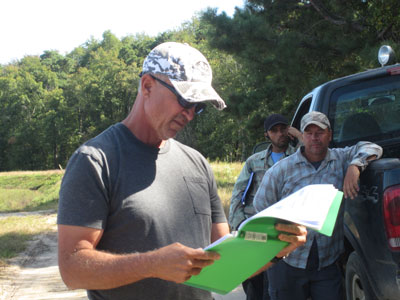
After the bog was harvested, General Manager Fred Torres held a harvest meeting with the supervisors and foremen out at Savannah #4 to go over our expectations and priorities for the coming season. ICM manager Cristina Tassone brought up the emphasis on TAcy this season; we want to place higher priority on harvesting the bogs that were under water the longest period of time, and at the same time test the TAcy to ensure we have the color.

Harvest is what we spend all year working toward. We focus on efficiency, quality, and growth, which will be measured by size, color, brix, and soundness. We never stop striving for quality fruit until the last bog is harvested. The proof is in the way our team responded after the storm to get us to harvest on time. This is what we do and who we are.

Fred emphasized in the meeting that establishing a chain of command is important, and above all, communication is key. Our supervisors need to be able to communicate to both their crew and to management what their daily plan is and be able to deal with anything that goes wrong…and something will always go wrong. Machines will break, a truck won’t start, a boom reel will get stuck: any number of things can happen, and that’s why communication and teamwork are so important. Fred continues, “Communication and teamwork are what makes us efficient and that’s how we get things done. We don’t want to be wasting time at harvest.” Our supervisors are also instructed to take care of the water every day; they need to have the bogs flooded and ready to go at the start of the work day, whatever it takes. It is crucial to keep the lines of communication open between the the people in the bogs and the people in the packing house, so that the packing house can keep the Receiving Station apprised of any changes.

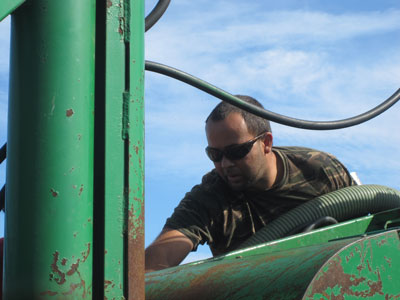
The harvest meeting also included a reminder from Louis Cantafio to review the maintenance of the harvesting machines. Louis and his crew ran everything prior to Wednesday to make sure all was in order. He wanted to ensure everyone paid attention to the tension on the chains: too-tight chains on the harvesters is too much work for the engine; it will wear out the chain and the sprockets and then will need to be replaced between seasons, which gets expensive.

All in all, we had a challenging two weeks to get to this point: prepared for harvest. Communication and continued training is key to keep us on our mission. One thing Bill has always liked about farming is that when it’s time to do something, you do it, and our team proved we will do whatever it takes to get there.

Efficiency in action

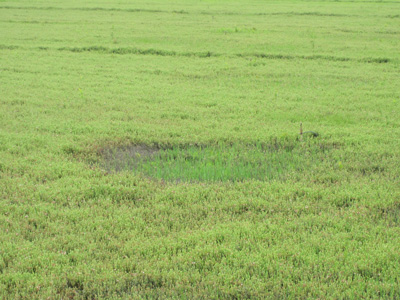
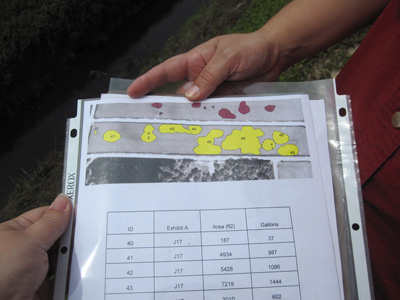
One annual spring job here at Pine Island Cranberry is dealing with a disease that affects cranberry vines called fairy ring. With the assistance of Dr. Peter Oudemans of the Rutgers Center for Blueberry and Cranberry Research, we have developed a treatment which needs to be applied in May. After two years, early indications are it’s working.

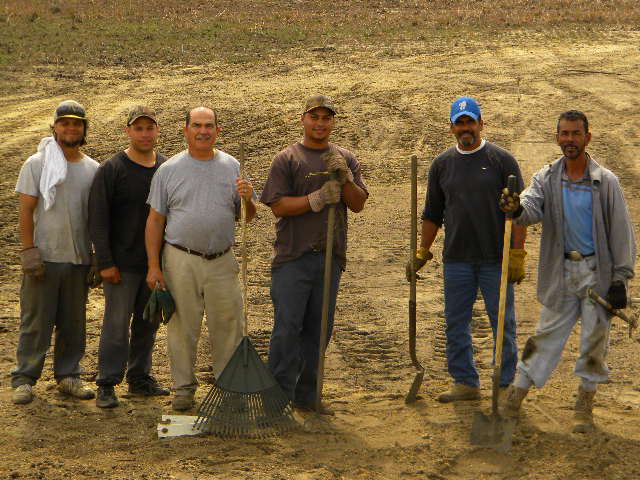
Our team, consisting of Jose Cruz-Soto, Brandon Morales, Alberto Torres, and Jose Cruz-Rodriguez, had a target date of June 1st to get the project done; instead, they finished eight days ahead of schedule. Because of their dedication, energy, and effort, we have, for the first time ever, been able to treat every ring at Pine Island, a total of 23 acres.

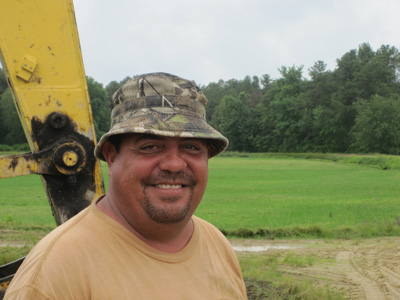
Jose Cruz-Soto

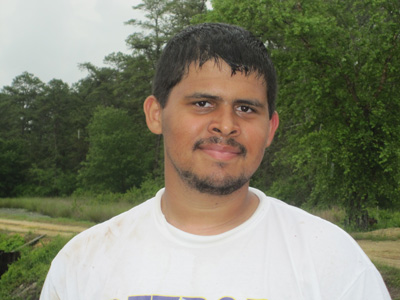
Brandon Morales

Alberto Torres

Jose Cruz-Rodriguez

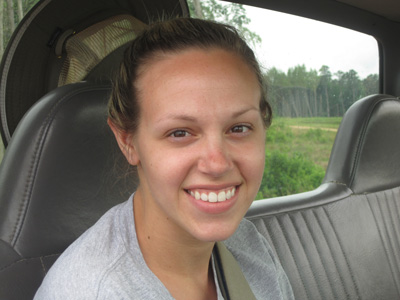
In addition to the above team members, our intern Christen Stroehlein (a Rutgers student majoring in nutritional sciences) mapped out and measured fairy rings with help of aerial photographs. This greatly increased our team’s efficiency and ability to reach their targeted goal ahead of schedule.

Thanks to everyone’s exemplary demonstration of our core values, chief among them protecting the environment, continuous improvement, and doing whatever it takes, Pine Island Cranberry steadily maintains our mission and vision: to continue our tradition of excellence and to be the most efficient producer in the world.