Improving equipment

Last month, we talked with Assistant Manager Mike Haines about drainage repair and the opportunities it gave us for collaboration with our fellow growers. “The cranberry community isn’t so huge that businesses will make equipment especially marketed to us,” Mike said at the time. “A lot of what we do is done by working together to improve what we have.”
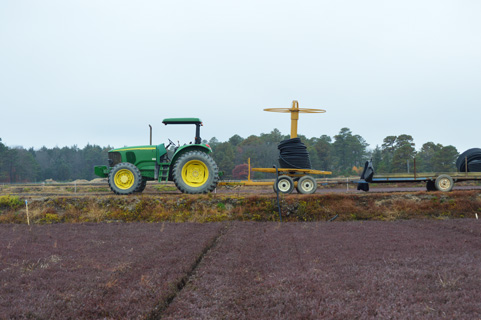
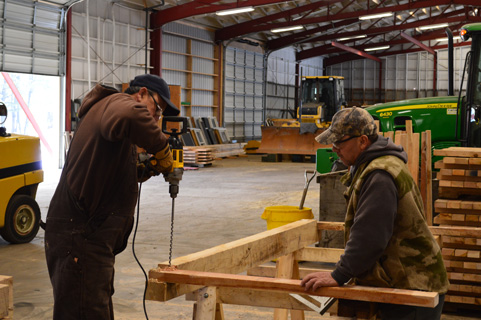
While we’d been borrowing the current set-up from fellow grower (and fantastic neighbor) Bill Cutts, our equipment team started working on building one of our own, making improvements based on team recommendations. This week, equipment team member Fred Henschel is nearly finished!
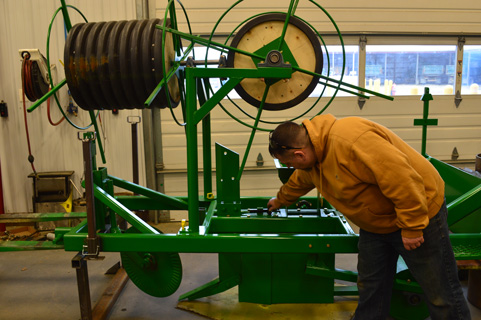
“This machine does everything,” Fred says. “It holds the rolls of 2-inch underdrain, it works with either a skid steer or a tractor with a three-point hitch…it’s been designed to fit just about everything we have on the property. Whatever is available.” He also designed it with some flexibility in mind. “It was designed based on input from the guys who will be using it, but if for some reason they really don’t like it, the entire center implement can be unbolted and I can place it on a different frame. It’s a prototype; nothing like this had been built before, as far as I know, so I can remake it until everyone’s happy with it.”
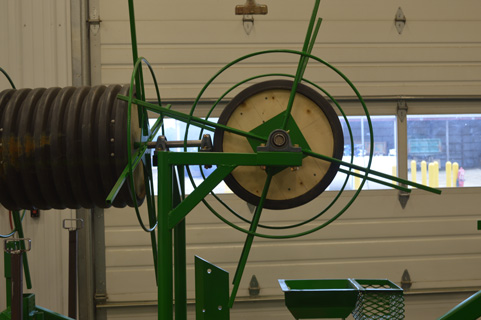
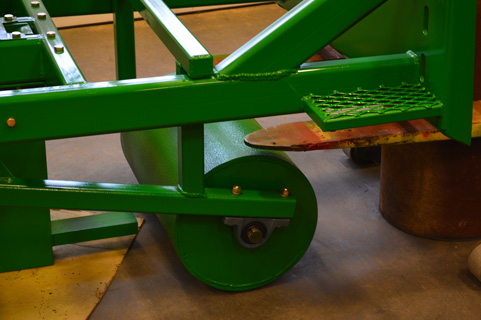
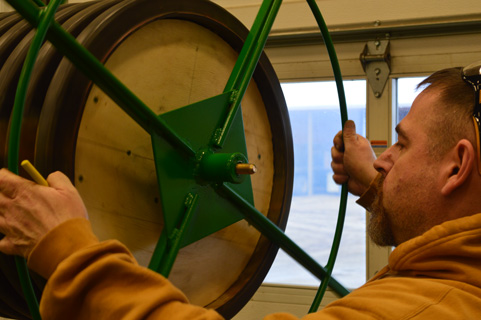
The entire machine was designed to be as efficient as possible. Fred looked at how the machine was cutting vines and decided he wanted as sharp an angle as he could get so it wouldn’t push the vines out as far; at that point, the roller would be able to pack the dirt right back down again. Having the spools right on the machine should also increase the speed. “What they can do is tow the trailer with all the rolls, put two on the machine, and keep going. Probably be able to go at three or four times the speed.” He’s also made some modifications for tools. “The basket here is for their tape and their knives, in case they need to add more pipe. This way they can take care of it right there and keep going.” As for changing out the rolls, he attached spinner handles for everything so nothing needs a tool to unfasten.
While the water is on the bogs for the winter, our equipment team is looking forward to seeing how the new machine works in the spring; we’ll be checking back then!

Big numbers!

This week, Pine Island Cranberry is thankful for our hard-working team, who made it 400 days accident-free! Last week, at our annual post-harvest lunch, CEO Bill Haines announced that to celebrate this milestone, our team would celebrate with a pizza lunch the day before Thanksgiving, and finish our day at noon.

Safety requires constant effort, says Facilities/Equipment Manager Louis Cantafio, who is tasked with making sure our facilities are maintained with the proper safety equipment. “You don’t just decide one day to do it and that’s that; it’s a weekly, daily, hourly effort. The guys have to look out for each other. You can’t guarantee there won’t be an accident, but the next best thing is to set up the facilities to have what we need. Our team is not readily replaceable, so we need to keep them safe and keep them healthy, and I think we’re doing a pretty good job.”

GM Fred Torres thinks so, as well. “400 days is a long time if you think about it. As many things as we do here, as many pieces of equipment and as many moving parts, that’s pretty impressive. I think it’s quite an accomplishment.”

“We’re here today because we made 400 days without an accident and that’s something to celebrate,” Bill said when addressing the team today. “One of our core values is opportunity, and part of that opportunity is paying attention to what we’re doing; using the equipment we have and looking out for each other. There’s no point to this if we’re not careful. It’s no good bringing in 316,000 barrels if we get hurt. We’re starting over now, but our new goal is 500 days; to hit 500, and then keep going. Enjoy the holiday: we have a lot to be grateful for. We got a lot of work done in November, and we’re out there working on the future right now. It’s only the beginning. I’m grateful to have the opportunity, and grateful to work with you guys. Thank you for everything…and take care of each other.”

Season’s End

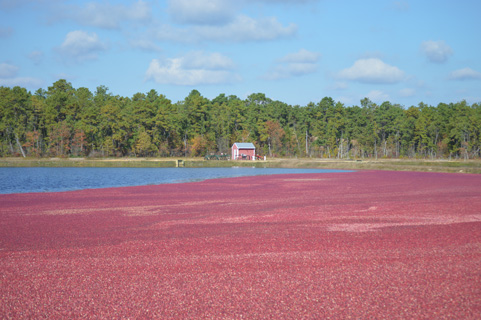
Another year, another excellent harvest!

“A lot of good news this year,” says GM Fred Torres. “We broke records on all kinds of bogs this year: new bogs, old bogs, big ones, small ones. The berries were smaller this year, which means less weight and fewer barrels, but even with that we were able to increase the number of berries per acre we grew this year. That’s just fantastic.” A cooler August this year meant smaller fruit. “The berries need some heat in August,” he says. “But we had cooler temperatures this year than we normally do, which starts the color a little earlier and means they’re not going to grow anymore. But we’re still really happy with the crop; we can’t control the weather, but we did everything else we had to do when we had to do it and still brought in an average of over 236 barrels per acre. We can be proud of that.”

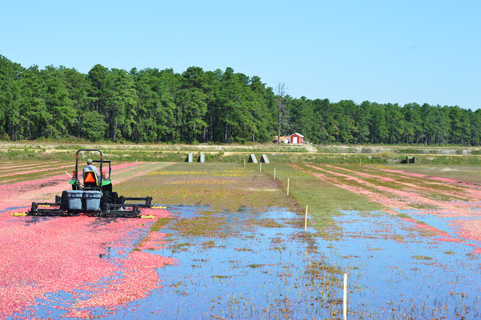
Another big triumph this year was the success of the Gates Harrow. “We’re very pleased with Gates Harrow and the time that it takes to do a bog,” Fred says. “Not rushing, just setting the normal pace the machine needs to run. And it picks clean.” The learning curve was a little steep at first, as you would expect. Team member Mickey Mercado had to learn how to move the ramps around as well as set them up for the machine; it has to be right so the tractor can easily turn around with as little overlap as possible. Fred says they got it down to a science: “By the end of the season, Rick [Zapata] couldn’t catch him. He would get to the end, and Mickey would be waiting already. If the guy on the tractor slows down, it’s going to slow down the guy who’s picking. At no time did Rick have to stop because he had to wait for Mickey. They both did really well.” Team members Joel DeJesus and Caesar Colon also put in some time on the new equipment, so when we eventually add another, we’ll have team members who are ready.

We also found out that we can run two crews with one Gates Harrow. “We have to manage the time well, but it can be done,” Fred says. During that particular experiment, the team members usually assigned to the smaller machines were able to do work elsewhere (such as bog clean-up after harvesting), making it an efficient use of time.

Best of all, everyone worked really well together. It can be tough; the crews are out there seven days a week for five weeks, and everyone gets tired toward the end. But we had a strong finish! “We set our target to finish by the end of the month, and we did,” says Fred. “We were done before the weekend and it was great! The weather was good, too. We had the one rough day, which was a little chilly with a lot of rain, but other than that it was good.” And we’re already using the season as a learning experience. “We’re always looking for ways to improve on the good stuff we already have: we have a great team, we have great equipment, but we can always challenge ourselves to do better. We know we can grow ‘em; we did it this year. But we have a lot of work to do this winter, and at the end of it, we’re going to come out of it working more efficiently than we ever have.”

Gates Harrow

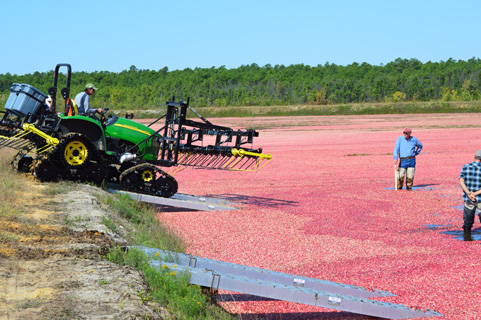
We mentioned a few weeks ago that our equipment team was working on a new machine for our harvest season. The Gates Harrow is the latest addition to our equipment program and everyone is very excited to try it come harvest time. “It’s much less labor intensive,” said manager Louis Cantafio at the time. “We typically run a six man picking crew and their target is about 12.5 acres per day. On a more level set of bogs, they can do more than that, but with a Gates Harrow we’ve seen a two-man crew get through 40 acres. It’s a lot more efficient.”

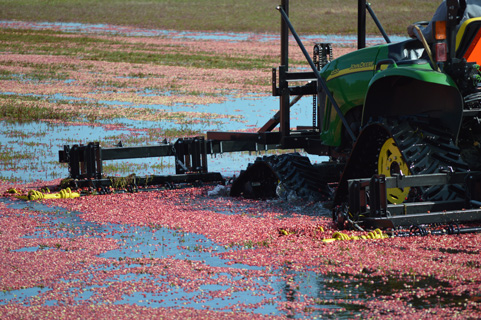
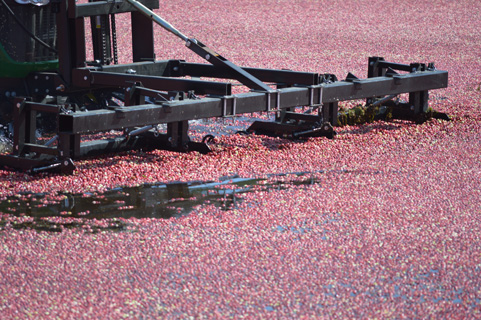
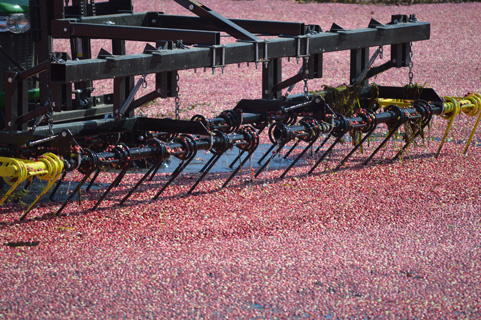
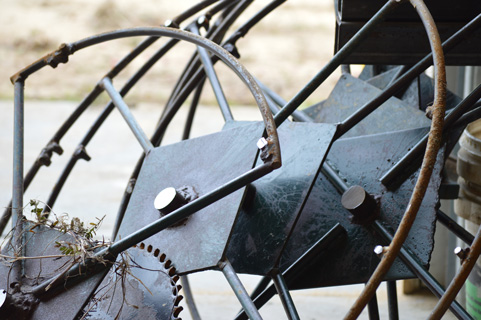
The Gates Harrow is a simple machine set up to cover more ground. At the front is a rod which holds vines down to the ground; as the tractor moves forward, the berries pop off the stems and roll up over the tines on the rake.

It’s not as hard on the plants as our usual method, and our renovation program is geared for increased efficiency by being user-friendly for equipment like this. Team supervisor Jeremy Fenstermaker thinks there are several advantages to the new equipment: “The biggest advantage is labor. It also picks a lot cleaner; it knocks almost everything off the vines. With the standard reels you’ll still find some berries left here and there. There’s also some fuel savings with just one tractor running.” While the machine uses less water for picking than the reels, the bogs still require additonal flooding for gathering, which is still done in the usual way. “Adding water isn’t a problem,” Jeremy says. “If you figure out timing it works out fine. As long as Rick [Zapata] is ahead it’s not that big a deal.” Another advantage: “The fruit is ‘cleaner’ as far as debris: fewer weeds, vines, twigs, all that kind of thing. Which means Mike can get fruit out faster at the packing house because his crew can process it faster.”

CEO Bill Haines is pleased with how things are turning out: “It’s been a steep learning curve, but I’m encouraged by the outcome,” he says. “Jeremy, Rick, and Mickey [Mercado] have done a great job learning the best way to use it. Every day is going a little better; I’m very pleased with the results.”

Interested in seeing the machine in action up close? Watch as team leader Rick Zapata takes us on a brief tour around the bog:

GoPro Gates Harrow from Pine Island Cranberry on Vimeo.

2014 Fall Planting

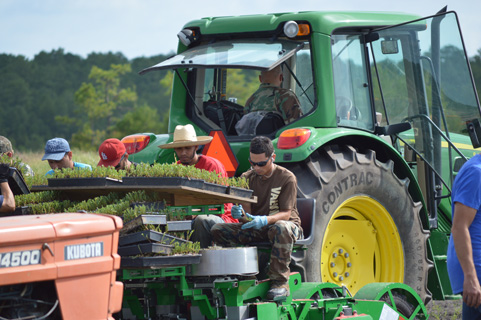
It’s once again time for the fall planting, which this year finishes the renovation at 11 Acre and Ben Haines that we started after the 2013 harvest. While in previous years we’ve started the fall planting after the harvest, we moved that forward in order to take advantage of the weather, the longer daylight hours, and the increased team availability.

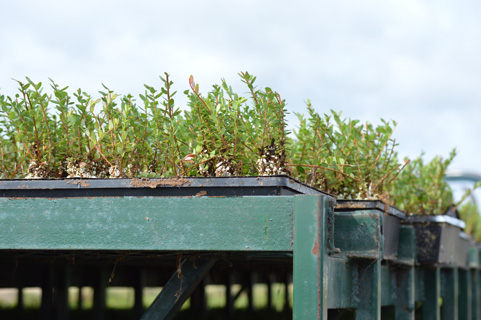
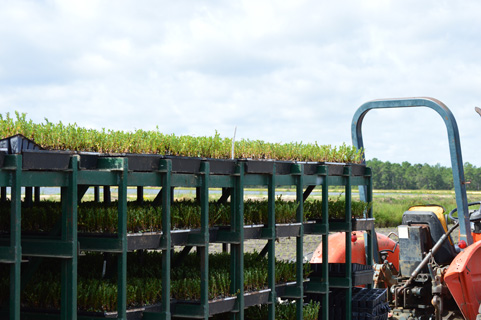
Assistant Manager Mike Haines is running the planting operation this year, and has been very busy making preparations. Mike’s previous job was with Integrity Propagation, so he was already familiar with the process from the other side of the business. “Here, we have a lot more heavy machinery involved,” Mike says “Integrity does the growing and the shipping; they also hedge all the flats for us. Otherwise, the vines are too long for our machine and they get caught.”

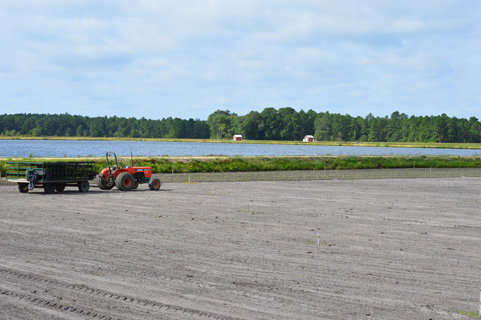
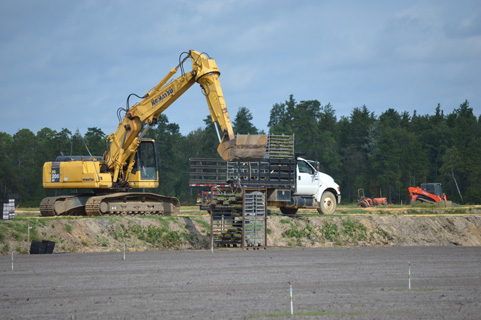
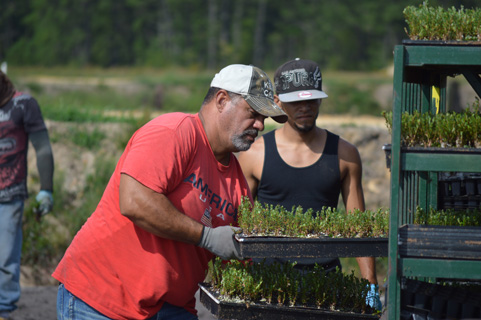
He’s been fairly busy getting everything ready prior to the start. “We had to finish the land leveling and disking so the ground is soft and the plants can go in more easily. We also had to get all the equipment out there: the machines, the tractors with the wagons to carry the flats, the excavator and the cage to move the plants from the truck to the wagons. We also had to assemble the teams; there are twenty-nine total on the crew with Kelvin [Colon] and Waldy [Blanco] running a crew each. It’s great having them there; they really know what they’re doing.”

Kelvin is always happy to help: “Everything he needs, every question he has, I’ll get the answer for him,” he says. “Whatever it takes!” One team started at 7:30, and the other team started from the other side of the bog at 8. “It’s going very smoothly right now,” Kelvin says. “Hopefully it stays this way to the end, if the nice weather holds up!” The team has a target of three acres per day, with 17 acres total, and everyone is confident they can get it done.

Mike is excited to see these bogs starts to produce. “This is our first big Mullica Queen bog,” he says. “It’s one of the new Rutgers varieties–a later variety that gets picked toward the end of the season–and was really popular with other growers when I was at Integrity. It has a very high yield potential; it will be really cool to watch it as it develops.”

Sanding wrap-up

In our efforts to make us better at what we do as well as improve our efficiency, our team holds occasional meetings to bring everyone up to speed. “We talk about what we’ve just finished, what’s going on next, what our goals are,” says GM Fred Torres. “This way everyone’s on the same page. We’ve had a lot of bad weather, so we’ve been constantly re-evaluating the plans; we’ve struggled with that all winter. But the new boxes are 40% done. 20% of the sprinklers are already in. We’re doing what we need to do.”

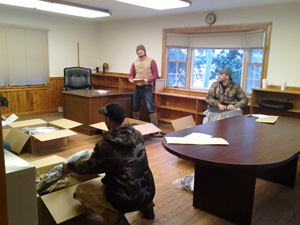
PIICM manager Cristina Tassone has also been keeping her team busy. “The ICM offices are almost ready,” she says. “The ICM team’s been putting together furniture and we’re just about ready to move in!” She also told the team to keep an eye out for new faces. “We’re in the middle of the interview process for some open positions, so some of the candidates have been here for farm tours.”

Best of all, though, is that our team has finished this year’s sanding!

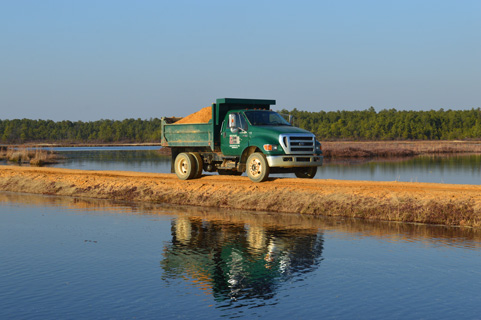
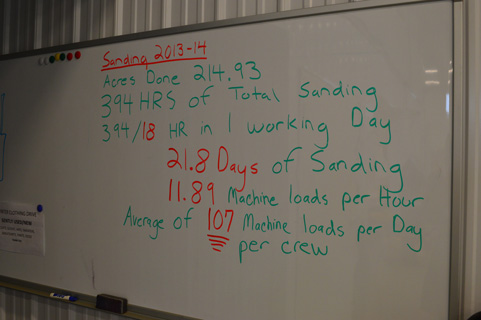
Supervisor Matt Giberson headed up the sanding team this year, and was pleased with the outcome. “The weather made it tough, but even with that things went well,” he says. “I was very pleased with how everything turned out. We sanded almost 215 acres over the course of 21 non-consecutive days, averaging 107 machine loads per crew.”

“The shop did a really great job with equipment maintenance,” Matt says. “We had no breakdowns that required shutting a crew down; there were some minor events that we fixed ourselves and only a couple of things where we needed to call for the equipment team.” He was also pleased at some of the new equipment. “The sanding box, on average, saves us about ten percent of the sand, and we actually move at a faster pace with it. That saves us from cleaning ditches in the spring, wasting sand on the dams, and extra work with dredging, screening, and hauling. It takes a little longer to move from one side of the bog to the other, but the team has been brainstorming solutions that should help us improve on that next year.”

Boxes

This week at Pine Island Cranberry we’re about ready for winter’s end, pretty as it is.

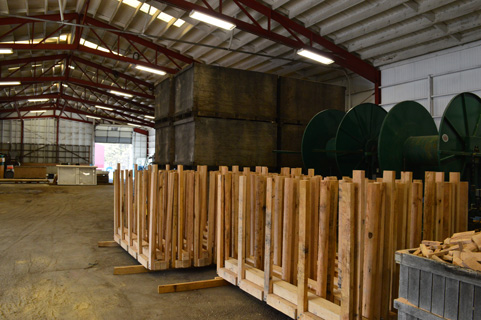
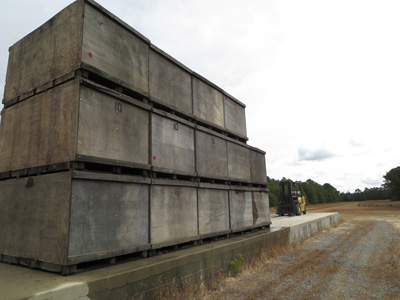
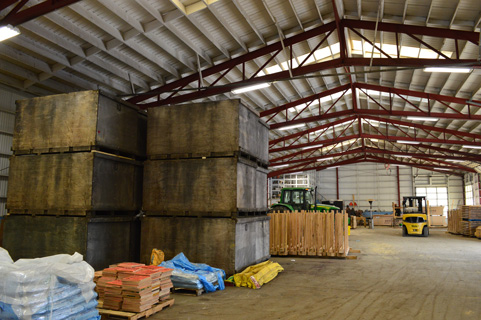
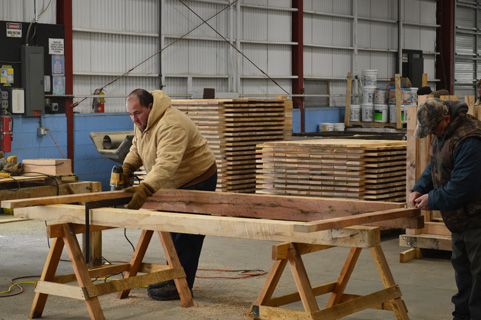
While our team continues to work on sanding when the weather permits, we have started another project as well: making boxes. As Facilities supervisor Mike Guest explains: “As we grow, our needs grow. As more berries come in, we’re going to need more boxes.” We have two hundred now, and our team is building another fifty. While we try to keep them in constant rotation, it helps to have a sizable reserve in order to keep moving as efficiently as possible, especially at the Sim Place platform.

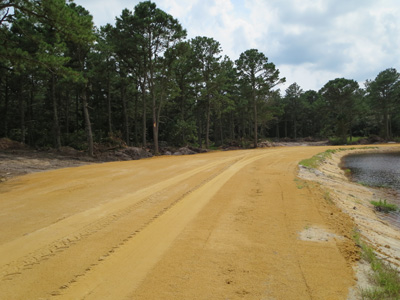
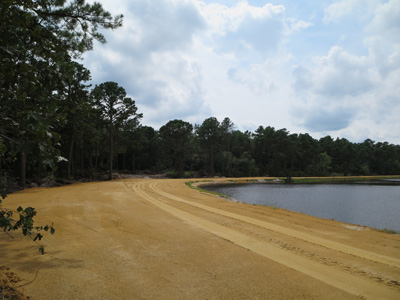
“A few years back, we built those first two hundred boxes and we built them bigger; they hold fifty percent more than the ones we used to use,” says GM Fred Torres. “But we’re always looking for ways to get better. Now, with the renovations we’ve been doing at Sim Place and at the Oswego section, we’re looking to improve even more.” We’re doing that by starting to widen more dams at Panama and on parts of the home farm (mainly toward the southern end) in order to bring more tractor trailers in for hauling.

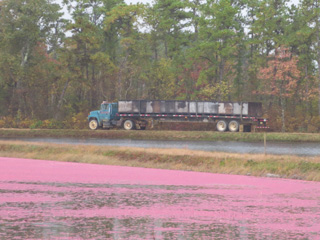
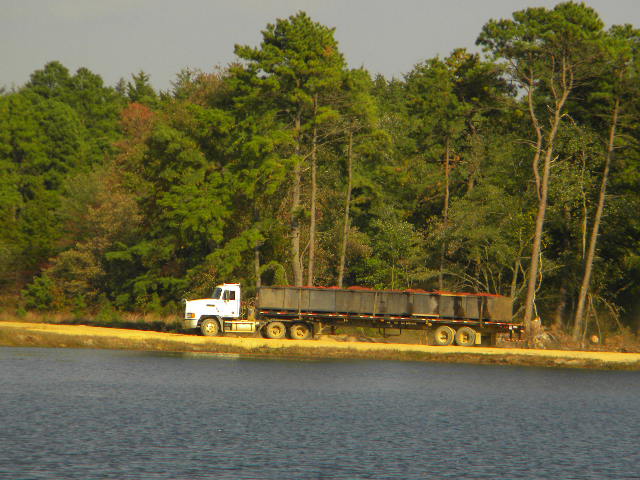
“It’s all in the name of efficiency,” says Fred. “Two tractor trailers together can carry eighteen boxes; that’s nine dump truck loads. It saves wear and tear on the dump trucks, it frees up some of the guys whose skills we can use elsewhere, and it helps us haul berries a lot more quickly.” So the plan is to get at least two more tractor trailers, eliminating the need for so many small trucks, and try to strike a balance. In order to make the hauling easier for the trailer drivers, we will be widening dams and turns at Red Road and several of the bogs by the Jonathan Wright reservoir. “That way we can haul and load right from the corners of those bogs,” says Fred. “It’ll be a sight, all those big trucks coming out of the woods!”

But before that, the boxes need to be finished, and various members of our team are doing whatever it takes to help get them done!

Harvest Lunch

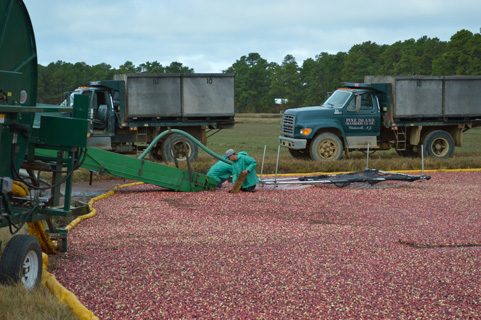
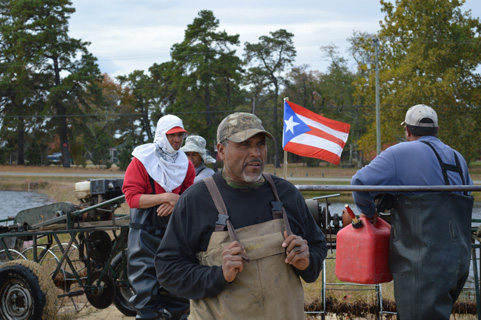
Pine Island Cranberry held its annual harvest lunch this week to say thank you to all of our team members who work tirelessly all year round but have really stepped it up this fall for both the harvest and the fall planting. It was also a chance to say good-bye to our seasonal team members, who are heading back home until next year.

One seasonal team member who will be retiring this year is Arturo Vieyra. Arturo has been coming to us for fifteen years; he worked on the Green Team gathering crew and has stepped up to do a thousand other things over the years, wherever he was needed. He has been a living example of Pine Island’s core values, always doing whatever it takes to help us bring in a better harvest, year after year.

Our team has a lot to be proud of this year; we set several production records and had our best harvest yet at Sim Place. Our newly created clean-up team put us ahead of schedule on our winter maintenance. As CEO Bill Haines said to the assembled team: “We delivered 38,000 barrels in two days. You can be proud of that and of everything else you’ve done this year.”

Bill also told the team: “It was a good harvest. It wasn’t a great harvest; we always want a record. But I will say this: everyone worked very hard. We had a very low rot percentage, which is fantastic. Everything was done way ahead of schedule. And that is a credit to organization and how hard everyone in this room worked. It means that if we’re doing the same things we’re doing right now, if we’re all working to improve what we do when it needs to be done, we’ll continue to see better results next year and every year after that. We have a great team here at Pine Island. And I want to say thank you from the bottom of my heart for everything you’ve done for this place.”

The finish line!

Our hard-working crews hit their final targets this week, and our clean-up crew is close behind!

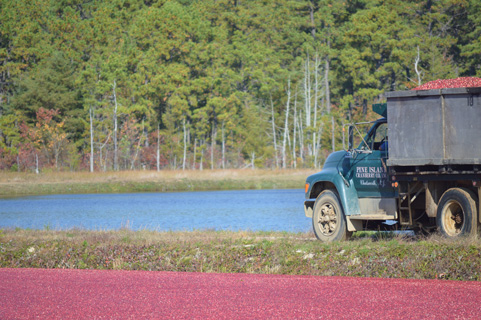
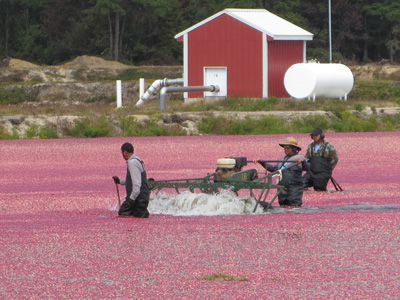
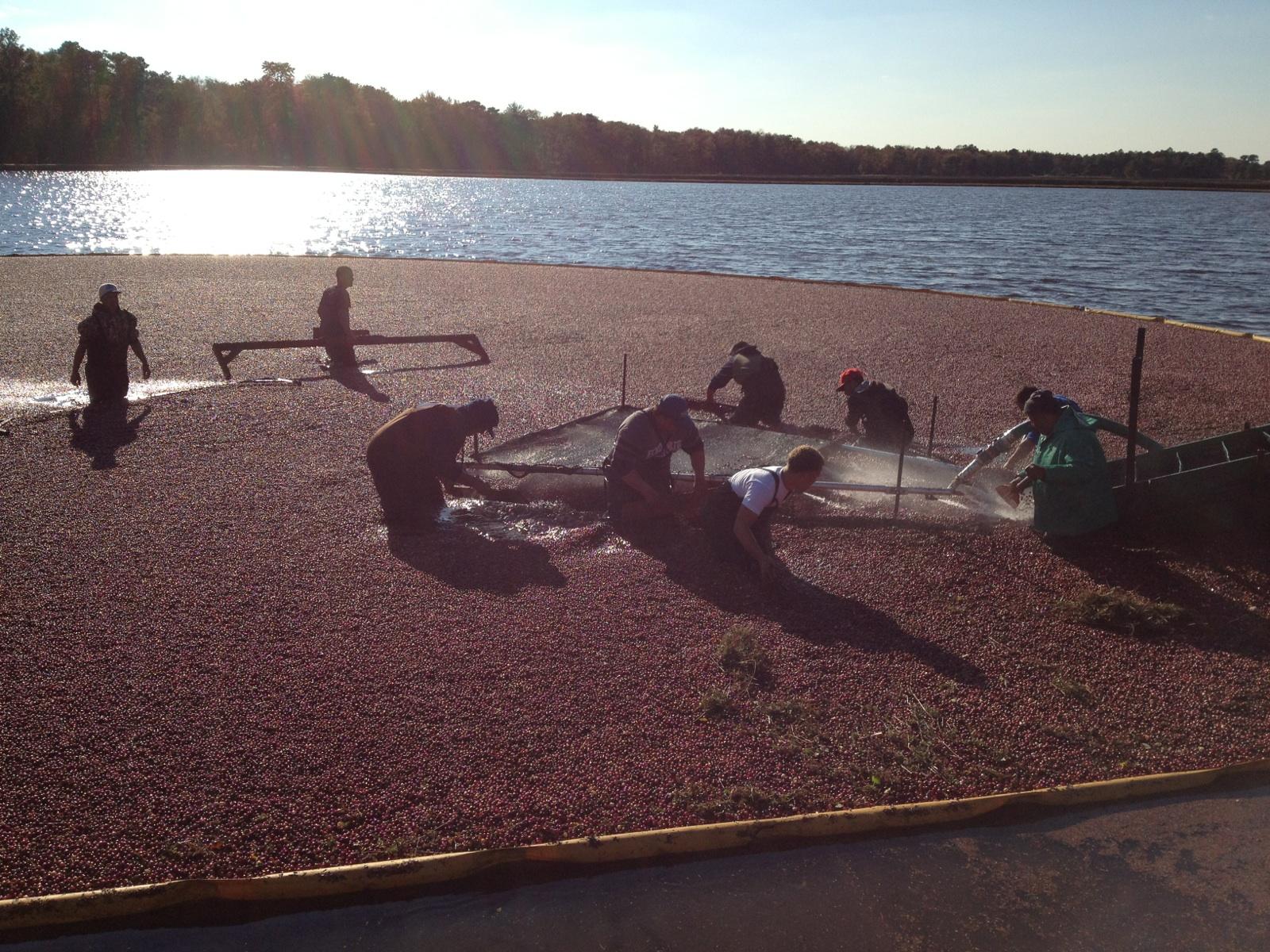
Pine Island Cranberry set several personal records this year. The one we are most proud of: on Monday, our teams moved so fast that we sent almost 14,100 barrels–over 1.4 million pounds of cranberries–to the Ocean Spray receiving station in Chatsworth. Other highlights: we harvested 1,299 acres in 35 days, finishing two days early and averaging 224.53 barrels/acre across the entire farm with only 3% rot.

We picked some of our newly renovated bogs for the first time and got results that give us great hope for our future. It was decided to pick some of the young bogs after only two growing seasons because there was already a lot of fruit in there. As CEO Bill Haines explained: “It might not be entirely useable, but if we leave it, the fruit drops off and rots into the ground. We won’t know exactly what will come up, but chances are it won’t be as productive. It won’t have the same genetics.” He calls those “mutts”. “Mutts will take over a bog if you let them; they grow more vines than fruit. They bloom at different times, making it impossible to time fertilizer and fungicide. They go backwards instead of getting better.” With an average of almost 189 barrels/acre at Panama #5 and 218 barrels/acre at Panama #6, it’s looking like growth and improvement can only continue over the next few years!

Overall, we set a new production record at Sim Place! Last year, our team brought in 32,220 barrels from Sim Place. This year, with several bogs setting new individual records, they harvested 41,966 barrels: a 30% increase in production! The low rot percentage made a huge difference here.
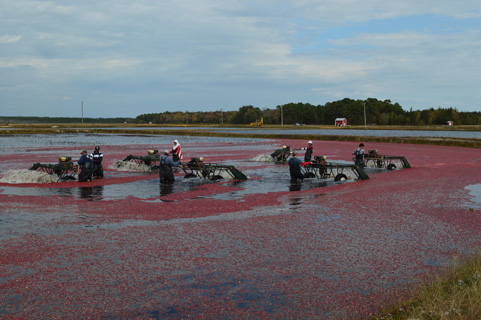
All of our teams did a phenomenal job. Despite the heavy summer rainfall, it was a dry autumn, and our supervisors had many challenges with water management. But they acquitted themselves admirably, and all of our teams surpassed their daily targets.

Our new fourth team, Jorge Morales’ clean-up/swan string crew, is still hard at work, but they expect to be done in good time, making it easier for our planting team to move on immediately to the Boricua renovation and helping Pine Island as a whole become more efficient. Their best record so far: covering 50 acres with swan string in one day!
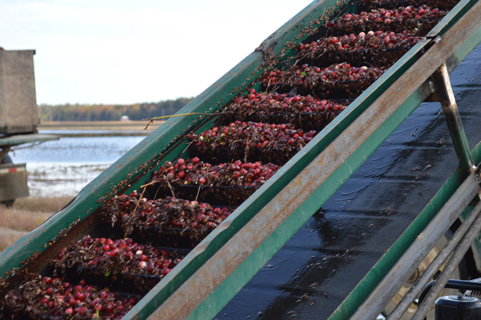
In the end, Pine Island’s success is dependent on all members of our team, who are always willing to do whatever it takes to help us be better at what we do: growing more acres and more fruit per acre, every successive year!

From Bill’s Desk: “Whatever It Takes”

Our newest feature: the first in an occasional series of entries by CEO Bill Haines.

At Pine Island Cranberry we believe in doing what ever it takes to achieve the goals we have set for ourselves. In fact, “Whatever It Takes” is one of the six core values that guide everything we do. This week three of our team demonstrated the kind of dedication it takes to put that core value into action.

The first day of harvest, our Sim Place well went out of commission when the harmonic balancer (also known as a dampener pulley) broke. It has been a dry August and September; our reservoirs are not as full as we would like. The well was crucial to flooding our Panama bogs for their first harvest. Louis Cantafio, manager of Equipment and Facilities, immediately went into action. He dispatched Ernie Waszkiewicz to remove the radiator from the engine to gain access to the balancer. In the meantime, he used every resource available to find the part. After locating one in northern New Jersey that afternoon, he made a four hour round trip to retrieve it. While waiting for Louis to return, Ernie rigged lights to make it possible to repair the engine and put everything back together after dark.

While this was going on, supervisor Matt Giberson, leader of the Blue harvest team, was successfully doing everything possible to flood the Panama bogs for picking. The team hit its target.

When Louis arrived with the balancer, he, Ernie and Matt went right to work. At 9:30 PM, I received a laconic text from Louis stating simply, “Well running”.

I am very proud of the effort, professionalism and dedication they displayed the first day of our 2013 harvest. They are perfect examples of the entire Pine Island team’s determination to do “whatever it takes” to be the best in the world at what we do. I am lucky to have such a team.